
 |
| Image Credit: St. Monica |
Most Christians ask themselves a lot of questions about the Eucharist. I think you too might have been asking yourself a lot about this.
You don't have to doubt anymore because in this post we have explained in detail everything you need to know about the eucharist.
Let's start with its meaning…
What is the Holy Eucharist?
 |
| Image Credit: Catechist Magazine |
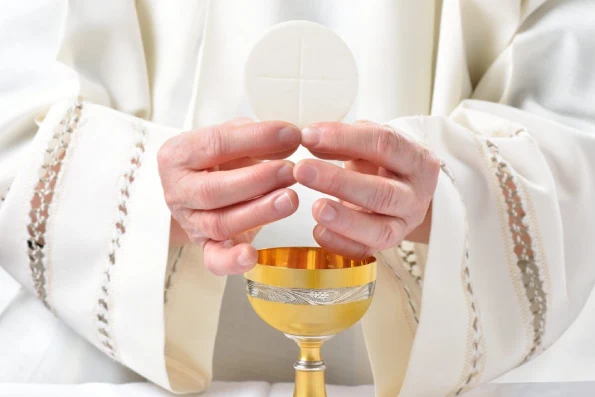
The Holy Eucharist is the Sacrament of the Body and Blood of Jesus Christ, under the appearances of bread and wine. It is through this Jesus is contained, offered and received. This sacrament was instituted by Jesus Himself at the Last Supper before Passover, on the evening of Holy Thursday. You can find all the details about the Last supper in the gospel of John 6:1-71 and Matthew 26:26-28.
Due to the theological depth of the Eucharist, many theologians refer to it by different names. Some of these names include: Sacrifice of the Body and Blood of our Lord Jesus Christ, Holy Mass, Lord's Supper, breaking of bread, Eucharistic assembly, memorial of the passion, death and resurrection of the Lord, Holy Sacrifice of the Mass, Holy Liturgy, Most Blessed Sacrament of the Altar, and Holy Communion. All these names try to explain how great the Holy Eucharist is.
The Eucharist is a sign of unity and bond of charity. It is a Paschal banquet in which the faithful receive Christ. Through it our souls are filled with grace, and a pledge of eternal life.
In the Catholic Church, the Holy Eucharist is one of the 7 sacraments of the Church. The other sacraments are Baptism, Confirmation, Penance, Anointing of the Sick, Holy Orders, and Matrimony. If you are not a catholic you might be confused a little about sacraments. So, sacraments are the visible signs instituted by Jesus Christ Himself to bring us the grace of salvation.
In a very special way, the Holy Eucharist is the sacrament that completes the entire process of initiating a catechumen into Christianity.
Origin of the Holy Eucharist
 |
| Image Credit: Watermarkwaves |
Let’s dig a bit to understand the origin of the Eucharist.
The name Eucharist comes from the Greek word, εύχαρισтеίν, which means "an act of thanksgiving" or "to give thanks". To get a biblical clarification on this you can read the gospel of Luke 22:19 and the first letter of St. Paul to the Corinthians 11:24.
It is an action that Jesus performs toward God, thanking God for completing the work of redemption. It is also an act of blessing—εύλογείν.
According to the Jewish tradition, a blessing is given during a meal to praise God's works of creation, read the gospel of Matthew 26:26 and Mark 14:22 for further details.
As we said earlier, the Eucharist was instituted by Jesus Christ Himself on Holy Thursday. It was during the Last Supper that He ate with His disciples in the upper room which is famously known as the Cenacle.
On that night Jesus was also betrayed by His own disciple called Judas Iscariot. Jesus offered the Eucharist purposely in order to perpetuate the sacrifice of the cross to all humans. Because Jesus is God, He has the power to change bread into His body and wine into His blood. And by instituting the Eucharist He gave this authority to all the apostles and through them to all Bishops and Priests.
The Second Vatican Council affirms that the Eucharist is the "source and summit of the Christian life" (Lumen Gentium, n. 11) and the "source and summit of all evangelization" (Presbyterorum Ordinis, n. 5).
Therefore, the Eucharist makes the Church and the Church makes the Eucharist, and it is from it that the Church draws spiritual strength. No Christian community can be built up and stand firm without the celebration of the Most Holy Sacrament of the Eucharist (Presbyterorum Ordinis, n. 6).
Form and Appearances
You might wonder: what does the Eucharist actually look like? If you are a Catholic who regularly receives Holy Communion, we are sure you are very familiar with its appearance. However, you might not be familiar with how the Eucharist looks in other Christian denominations.
Let's take a closer look at it…
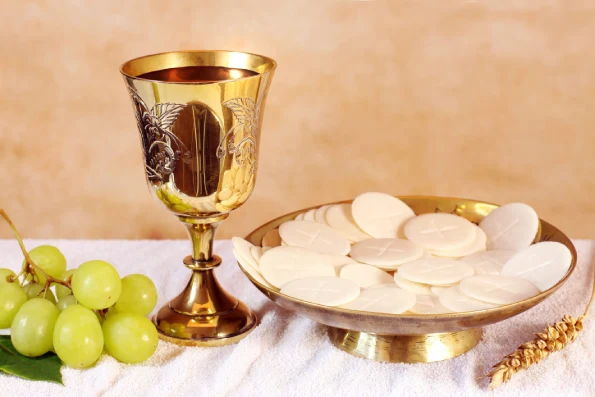
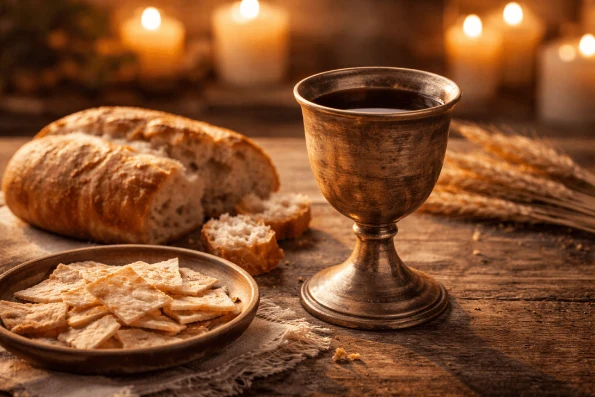
The form and appearances of the Eucharist differ from one denomination to another. Among Catholics, Anglicans, Lutherans, Eastern Orthodox, and Oriental Orthodox, it is served as sacramental bread usually leavened or unleavened and sacramental wine served as alcoholic wine.
While among Methodists, Baptists, and Plymouth Brethren, sacramental bread is served as either leavened or unleavened, and wine is served as non-alcoholic grape juice, or water among the Latter-day Saints.
The Eucharist is consecrated on an altar or a communion table and consumed thereafter. The consecrated elements are the end product of the Eucharistic Prayer.
How, Where, and When Christ is in the Holy Eucharist
 |
| Image Credit:OSV News |
All Christians recognize a special presence of Christ in this rite, although they differ about exactly how, where, and when Christ is present.
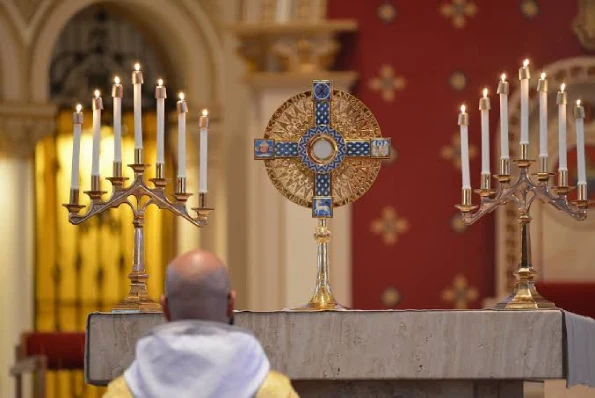
The Catholic Church believes that the Eucharist is the body and blood of Christ under the species of bread and wine. It maintains that by the consecration, the substances of the bread and wine actually become the substances of the body and blood of Christ, while the form and appearances of the bread and wine remain unaltered, such as color, taste, feel, and smell. This phenomenon of the substances of the bread and wine actually becoming the body and blood of Christ is known as transubstantiation.
The Eastern Orthodox and Oriental Orthodox churches believe that an objective change occurs of the bread and wine into the body and blood of Christ.
The Lutherans believe the true body and blood of Christ are really present "in, with, and under" the forms of the bread and wine, known as the sacramental union.
Reformed Christians believe in a real spiritual presence of Christ in the Eucharist. Anglican eucharistic theologies universally affirm the real presence of Christ in the Eucharist, though Evangelical Anglicans believe that this is a spiritual presence, while Anglo-Catholics hold to a corporeal presence.
Others, such as the Plymouth Brethren, hold the Lord's Supper to be a memorial in which believers are "one with Him". As a result of these different understandings, the Eucharist has been a central issue in the discussions and deliberations of the ecumenical movement.
What Does the Bible Say About the Holy Eucharist?
The Holy Bible clearly demonstrates the presence of this Sacrament of the Holy Eucharist in the Synoptic Gospels, namely the Gospels of St. Matthew, St. Mark, and St. Luke. St. Paul, in his first letter to the Corinthians, explains very well how the first Christians celebrated this holy sacrament. The gospel of St. John does not explicitly describe its institution in his writings, although he explains it to some extent in chapter 6.
In short, the following passages explain the Holy Eucharist in the Bible:
● Mt 26:26-28
● Mk 14:22-24
● Lk 22:19-20
● 1 Cor 11:23-25
Why Did Jesus Institute the Holy Eucharist?
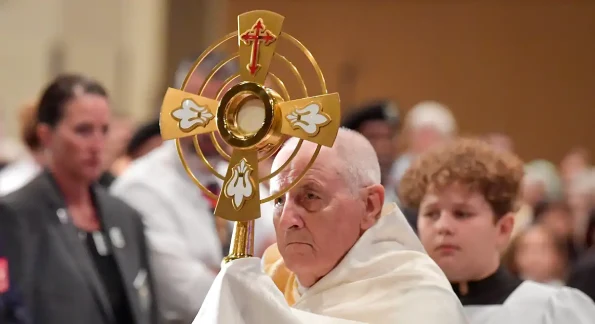 |
| Image Credit: Dphx.org |
This is a great question because most christians get confused. You might also be one of them.
In fact, the Eucharist is very important in our lives, and to grasp this very clearly lets give you the reasons
Jesus instituted the Holy Eucharist to make us one with Him and close to God, but more importantly, so that we can draw God's grace and blessings.
1. The Holy Hour of Jesus
Jesus instituted the Holy Eucharist at a specific "hour," which was not an ordinary mealtime, but a time appointed by God to fulfill the plan for human salvation.
This hour is a historic moment that brings humanity and God together through Jesus Christ. In this hour, humans are forgiven their sins and granted a new beginning. It is the exact hour for fulfilling the act of salvation. So during the hour of Eucharist celebration, we get the opportunity to speak with God in the spiritual realm.
2. Thanksgiving and Praise to God
The word "Eucharist" itself means "Thanksgiving." Jesus instituted this sacrament as the highest expression of thanksgiving and praise to God. We offer these praises because God the Father is good, He created us with great favor, and He redeemed us through His beloved Son, Jesus Christ. When we hold the cup of wine and give thanks, we remind ourselves that human life should be a continuous act of thanksgiving to God.
3. To Build and Strengthen Unity and Love Within Us
The Holy Eucharist is a sign of unity and a bond of charity, so it unites us with all people at all times regardless of any kind of differences. This is an obvious truth. Christ says, "He who eats my flesh and drinks my blood abides in me, and I in him." Since we become what we eat, when we eat the body and drink the blood of Christ, we have Christianity within us and become one, which is why we are called Christians.
4. A Memorial of the Holy Sacrifice of Salvation
Jesus instituted the Eucharist as a living and continuous memorial of His passion, death, and resurrection (the Paschal Mystery). When He said "do this in memory of me," He did not mean to perform this celebration merely as a past memory, but to make this celebration living and continuous in our hearts. This celebration constantly reminds us of the value of our redemption.
5. To Fulfill His Promise to Be With Us Forever
Jesus instituted the Eucharist to fulfill His promise to be with us always, even until the end of the age. When He said "this is my body," He changed the bread into His real presence—His Body, Blood, Soul, and Divinity. Through the Holy Eucharist, Jesus Christ unites Himself with the Church.
Fruits of the Holy Eucharist
 |
| Image Credit: Franciscan Sisters TOR |
We receive the fruits of the Holy Eucharist, as we pray in front of it during adoration and when we receive it during Holy Mass.
These fruits are as follows:
1. It Unites us with Jesus Christ
The Holy Eucharist is not just a sign, but real food that brings about a union between Christ and humanity. Just as ordinary food is digested and becomes part of our physical bodies, we are united with Christ when we receive the Holy Eucharist.
Our connection with Christ goes far beyond our feelings or thoughts; it is a union of spirit and spirit, where Christ enlivens our humanity, thereby making us like Him in thinking, loving, and acting.
2. The Source of Eternal Life
The life we have as humans is limited, but through the Holy Eucharist, we receive eternal life. Jesus says, "As the living Father sent me, and I live because of the Father, so he who eats me will live because of me" you can read this in the gospel of John 6:57. When we participate in the Holy Eucharist, we receive new strength and turn toward God in our work, our relationships, and even when we go through challenges.
3. Unity in the Church
The Holy Eucharist brings unity, thereby breaking down all walls of division, tribalism, social classes, and discrimination among human beings. Apostle Paul teaches that because the bread is one, we who are many are one body, for we all partake of that one bread. When we approach the Holy Eucharist, we are made into one family, one community, and one church.
4. An Act of Repentance that Cleanses us From Venial Sins
Whenever we participate in the celebration of the Eucharist with a spirit of repentance and love, this sacrament blots out our small sins (venial sins) and revives the love that had begun to grow cold within us. The blood of Christ, shed for the forgiveness of sins, works to protect and defend us from falling into mortal sins.
Important Pastoral Note: It is good to remember that the Eucharist does not take the place of the Sacrament of Penance (Reconciliation). As a Christian, it is important to remember that the sacrament of penance is necessary for the forgiveness of sins. Moreover, the Holy Eucharist is the food for the living and clean Christians.
5. Medicine to Heal us from Death
St. Ignatius of Antioch calls the Eucharist the "medicine of immortality" (an antidote to death). Unlike manna that the Israelites ate in the desert and died, this sacrament comes down from heaven to heal the human soul from perishing in eternal spiritual death. It works like a spiritual immune system, giving us endurance and strength to fight against the spiritual diseases that can separate us from God.
6. It Assures Us of Resurrection on the Last Day
The promise of Jesus is very clear: "He who eats my flesh and drinks my blood has eternal life, and I will raise him up on the last day" Jesus said this in the gospel of John 6:54. The Eucharist places a seal of resurrection within our souls. Because of this, we receive the status of sharing in the glory of the resurrection with Jesus Christ.
The Holy Eucharist gives us hope that our lives will not end in the grave, but we will be raised on the last day.
The Power of the Holy Eucharist
 |
| Image Credit: The Simple Catholic |
Have you ever asked yourself how powerful the Eucharist is?
If you never thought of this, let’s give you these secrets.
If you didn’t know the power of God is present in the Holy Eucharist. Before receiving the Holy Eucharist we pray: "Lord, I am not worthy that you should enter under my roof, but only say the word and my soul shall be healed."
It would certainly be a big mistake for us to think that healing only concerns physical matters.
Not every healing is a physical healing. Apostle Paul, in his first letter to the Thessalonians chapter 5:23, reminds us that we humans are body, soul, and spirit. Therefore, our souls and our spirits can be healed, even if healing has not come to the body. When inner healing occurs, you will often see its results physically as well. Here is a famous Latin saying: anima sana in corpore sano which means a healthy soul in a healthy body.
So…
1. Holy Eucharist protects the divine life of the soul that we received during Baptism, by providing the communicant with divine strength to fight against temptations and weaken the power of sinful desires. It strengthens the free will of our souls to withstand the attacks of the devil.
2. Holy Eucharist increases the life of grace that we already possess. It does this by reviving the virtues and gifts of the Holy Spirit that we have.
3. Holy Eucharist treats the spiritual diseases of the soul by removing venial sins and protecting a person from temporal punishments of the world resulting from sin. Forgiveness of venial sins and temporal punishments caused by these sins take place at once because of the perfect love for God that is awakened by receiving Holy Eucharist. Forgiveness of these sins depends on the amount of love directed toward the Eucharist.
4. Holy Eucharist gives us spiritual joy when we serve Christ, when we defend His way, when we carry out our duties in life, and when we make the sacrifices that face us in imitation of the life of Jesus.